

Let me tell you what most cane reviews leave out. The reviewer bought the cane three weeks ago, it arrived in good shape, and they wrote four sentences about how sturdy it felt. That is not a review. That is an unboxing with a star rating attached. I have been using the NOVA Heavy Duty offset handle cane every single day for two years, through an Illinois winter, through a summer trip to a state park, and through my daughter's backyard wedding where I walked on grass for the first time since my leg fracture. I know things about this cane that you cannot learn in three weeks.
Some of what I know is good. Some of it is a fair warning. All of it is something I genuinely wish someone had told me before I bought it. That is what this review is.
The Quick Verdict
A genuinely well-built cane with an offset handle that actually reduces wrist strain, but the rubber tip wears faster than the listing implies and it is not the right tool for serious outdoor terrain.
Amazon Check Today's Price →Two years of daily use and I still reach for this one every morning.
The NOVA offset handle cane has a 500 lb weight capacity, height-adjustable shaft, and a foam grip that is genuinely easier on arthritic wrists than a standard crook handle. After two years, I can tell you it is worth the price.
Amazon Check Today's Price on Amazon →How I've Used It and Why My Opinion Is Different From Most Reviews
I am Virginia Miller, 74 years old, and I broke my wrist in 2019 and my leg in 2022 in two separate falls. After the second one, my physical therapist sat me down and told me in plain language that I needed a cane permanently, not just during recovery. I had been resisting that conversation for a long time. The word "cane" felt like a surrender. My PT was patient with that and eventually I came around.
I weigh 162 pounds now. I walk about half a mile each morning when the weather allows, and I use the cane inside the house too, especially on the tile floor in my kitchen and bathroom. That is daily use, in every condition, for two years. I have also had to replace parts of this cane, adjust it in ways the instructions do not describe, and figure out the one situation where it genuinely let me down. I want to tell you about all of that.
The Thing Nobody Mentions: The Rubber Tip Wears Out
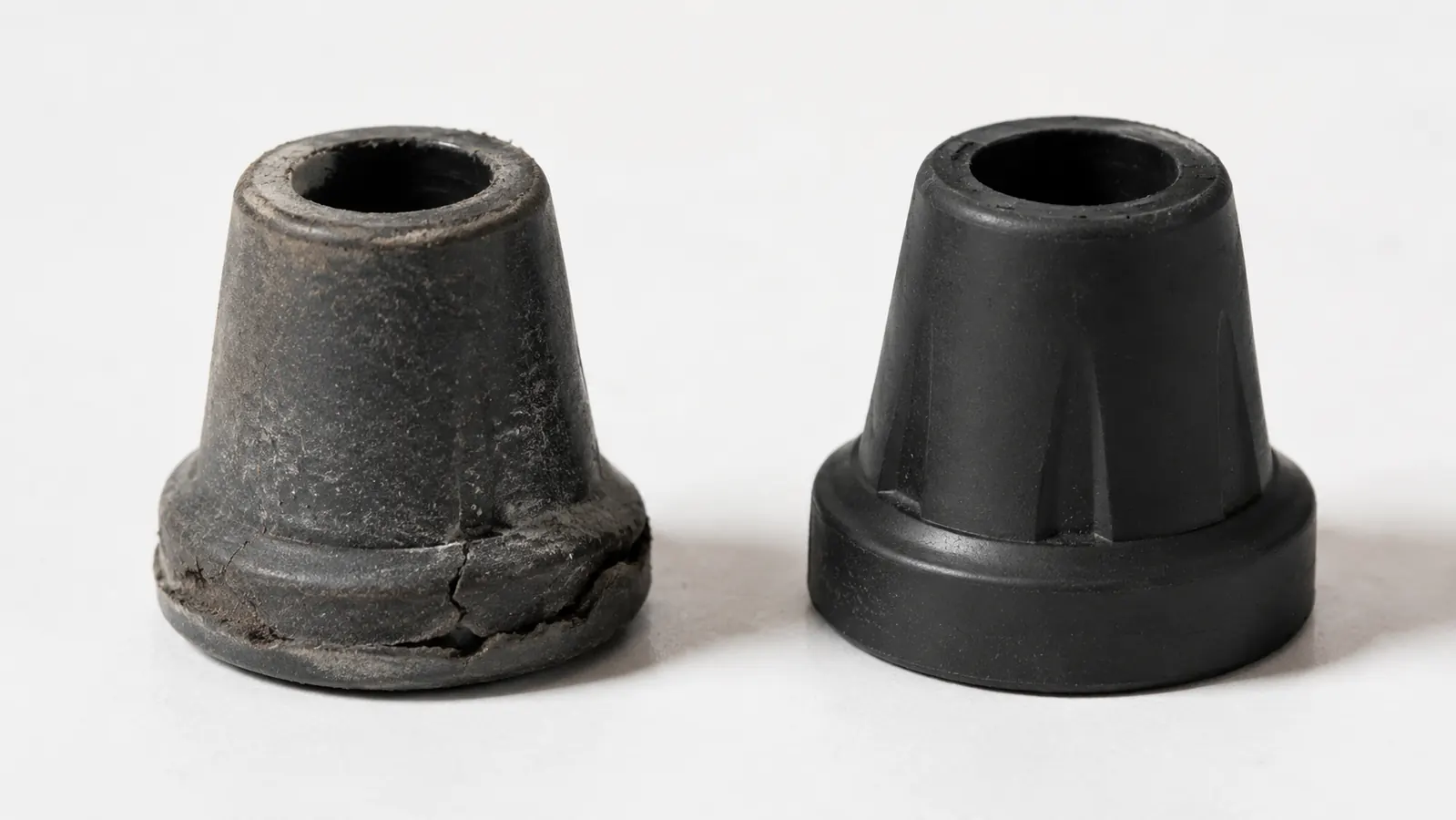
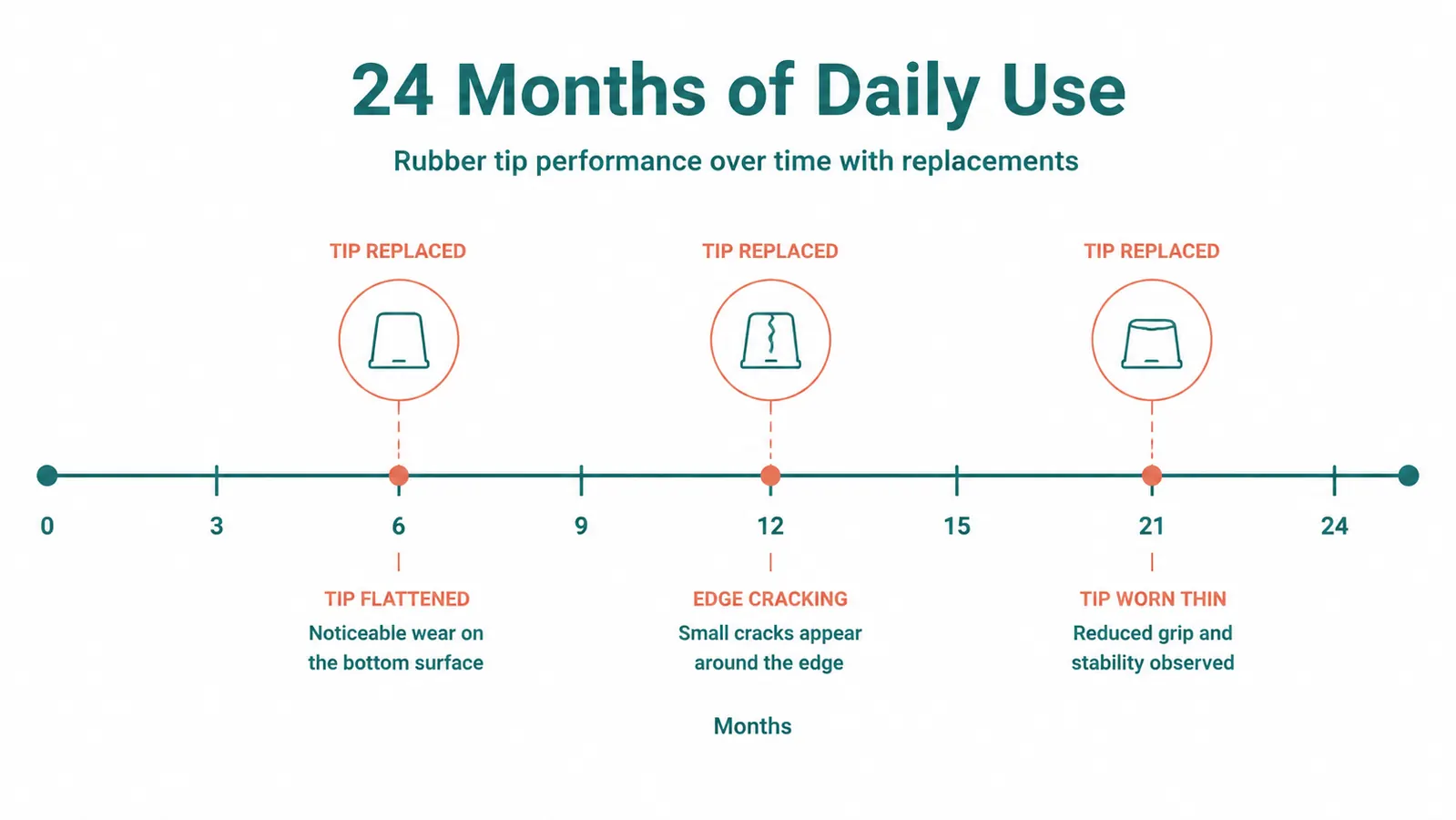
Every positive review of the NOVA cane talks about the handle and the height adjustment. Nobody talks about the rubber ferrule at the bottom. That rubber tip is the part of the cane that is in contact with the ground every single step you take, and it wears down. On my walking schedule, it flattened noticeably by month six. By month thirteen, I noticed the edge had started to crack. I replaced it then. I am currently on my third tip, which I put on around month twenty-one.
A worn cane tip is not just a cosmetic issue. A flat or cracked tip provides less grip on smooth floors and on wet pavement. This is the safety component that the listing does not emphasize. The replacement tips for a three-quarter inch shaft are inexpensive and easy to find, but you have to know to look for them. My advice: buy two or three replacement tips when you buy the cane. Mark your calendar for six months and do a visual check. Do not wait until you feel the cane slipping.
A worn cane tip on a wet tile floor is exactly the kind of thing that causes falls. Nobody told me to check it every six months. Now I am telling you.
The Offset Handle: What It Actually Does for Your Wrist
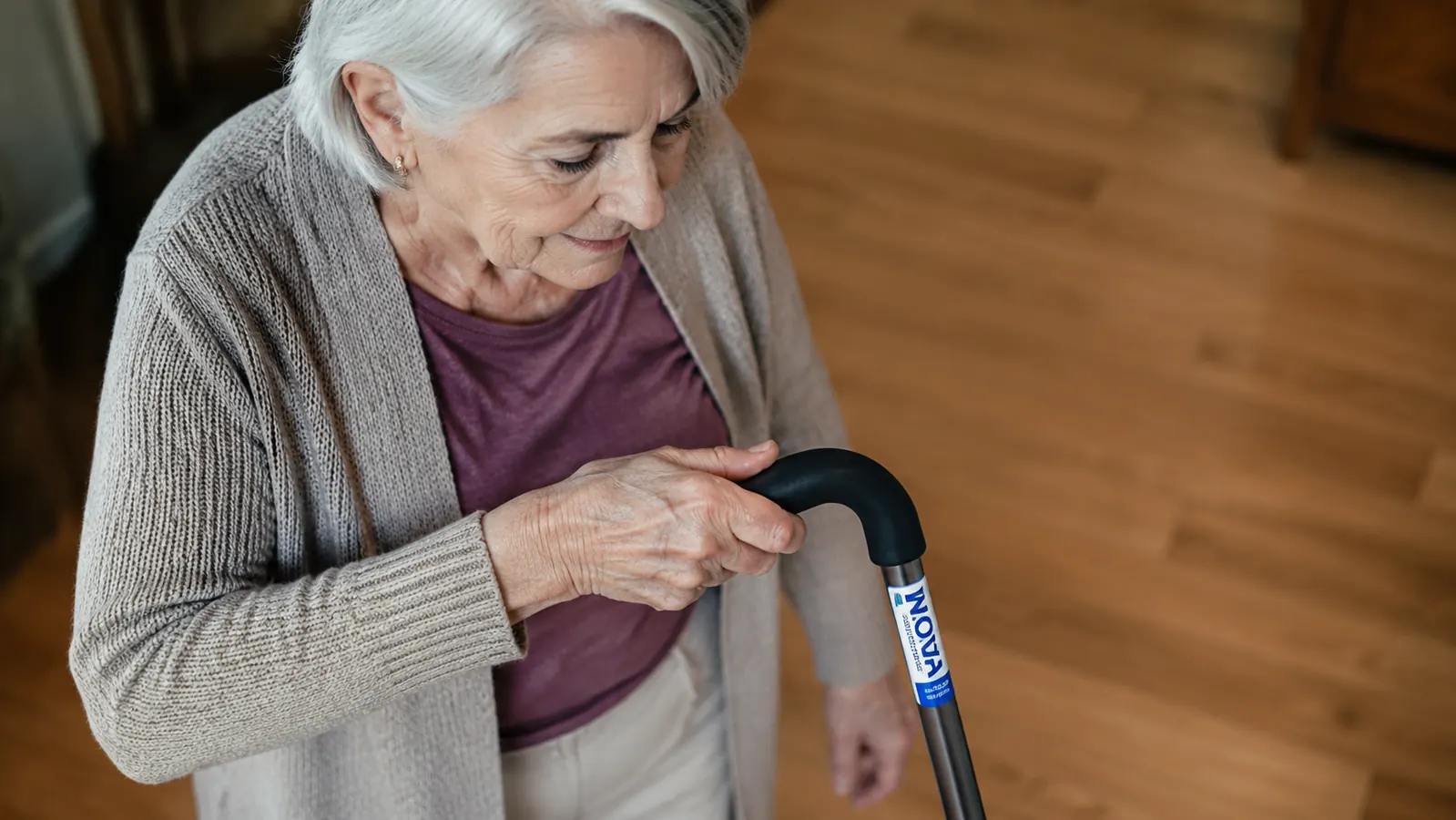
The offset handle is the reason I picked this cane over a standard crook-handle model. With a standard cane, the handle sits directly above the shaft. That puts your wrist in a bent position with every step, and if you use the cane for any real distance, that bend creates pressure on the tendons. I learned this the hard way with my first cane, which was a basic aluminum model my daughter grabbed from a pharmacy display. My wrist ached by the end of every walk.
The offset design on the NOVA pushes the handle forward so that your wrist sits in a more neutral, natural position when you grip it. I noticed the difference within the first week. After two years, I can tell you that wrist ache is essentially gone on my daily walks. If you have any arthritis in your hands or wrists, or if you broke your wrist like I did, this design difference is not a small thing. It is the main reason I would tell a friend to skip the pharmacy cane and buy this one instead.
The foam grip itself is comfortable and has not compressed or torn in two years of use. That surprised me. I expected it to get slippery or peel. It has not. My hands do sweat in warm weather and the foam handles that without getting slick.
The Height Adjustment: Good, But There Is a Catch
The NOVA cane adjusts from 30 to 39 inches in one-inch increments using a push-button pin. For most people that range covers the right height with no trouble. My PT set mine at 36 inches and it has stayed there. The push-button mechanism feels solid. After two years of adjusting and locking it, it has not loosened or become unreliable.
Here is the catch. The button itself can be hard to depress for someone with significant finger stiffness or weakness. My grip strength is reasonable, but when I tried to help my neighbor Margaret adjust her daughter's cane, Margaret herself could not get the button to release without help. If the person using the cane will be adjusting it on their own and has weak grip or severe arthritis in the fingers, this is worth knowing before you buy. It is not a dealbreaker, but it means that height adjustment may need to be done once by someone else and then left alone.
Where This Cane Struggles: Outdoor Terrain
My daughter's backyard wedding taught me the honest limits of this cane. The backyard had slightly uneven grass with a gentle slope. Walking on that surface with a single-point cane was harder than I expected. The single rubber tip shifts on soft or uneven ground, and because all the support is on one small contact point, you have to pay constant attention on irregular terrain.
On smooth pavement, on flat indoor floors, even on wet sidewalks with a good tip, this cane is reliable. But if the person using it plans to walk on grass, gravel, garden paths, or anything with consistent unevenness, a quad cane with four contact points gives more stability on those surfaces. I do not say this to argue against the NOVA. I say it because the honest answer to "which cane is right for me" depends on where you are going, not just how much you weigh or how tall you are. My full comparison of offset canes versus quad canes goes into more detail on this.
For the walking I do, which is mostly pavement and indoor floors, this cane handles everything I need. I have not fallen with it. That matters.
The 500 Pound Weight Capacity: What That Number Actually Means
The listing calls this a heavy duty bariatric cane with a 500 pound weight capacity. At 162 pounds, I am well under that limit. But I want to address this for the adult children reading who might be buying for a heavier parent. The 500 pound rating is for the shaft itself, tested under static downward pressure. That is not the same as how the cane feels under dynamic load when someone is leaning on it to catch themselves mid-stumble.
For someone between 200 and 350 pounds using the cane for ordinary walking support, it should be well within working range. But if a heavier user is planning to use the cane as a primary fall-arrest device, meaning they expect to fully catch themselves on it if they trip, I would encourage them to talk to their PT or occupational therapist about whether a cane is the right primary aid, or whether a rollator or forearm crutch gives more real-world stability. The weight rating tells you the shaft will not buckle. It does not tell you the whole story about what happens when someone reaches for it in a stumble.
What I Liked
- Offset handle genuinely reduces wrist strain compared to standard crook-handle canes, especially over longer walks
- Foam grip stays comfortable and non-slip after two years of daily use, including sweaty summer walks
- Height adjustment range covers most adult heights, and the push-button locking mechanism is solid and reliable
- Lightweight enough to use all day without arm fatigue, at just over one pound
- 500 lb weight rating gives peace of mind for heavier users and the shaft has shown no flex in two years
- Folds flat easily for car travel, flights, or storing under a restaurant table
Where It Falls Short
- Rubber tip at the base wears faster than the listing implies. Plan to replace it at around six months for daily walkers
- Height adjustment button can be difficult to depress for users with weak grip or significant finger arthritis
- Single-point contact means it is not ideal for uneven outdoor surfaces like grass, gravel, or garden paths
- No wrist strap included. If dropping the cane in a stumble is a concern for the user, a universal cane wrist strap needs to be bought separately
- The quad cane gives meaningfully better stability for users who need to stand still and lean on the cane, rather than walk with it
What the One-Star Reviews Are Actually Complaining About
I spent time reading through the one-star reviews on Amazon. Most of them fall into three categories. First, the cane arrived bent or damaged during shipping. That is a shipping issue, not a product issue, and Amazon typically resolves it with a replacement. Second, the height range does not cover very short or very tall users. The 30 to 39 inch range works for most people around 5'2" to 6'0", but if someone is shorter than 5'1" or taller than 6'2", they may hit the edge of the range. Check the height chart on the listing before ordering. Third, the rubber tip slipped on a smooth floor. In almost every case where I could read the full review, this happened with a worn or old tip. A fresh tip on a dry smooth floor does not slip under normal use.
There were a few complaints about the push-button getting stuck or the button wearing out over time. I have not experienced this, but it is worth knowing. If it happens after a year or two, the NOVA customer service line has a reputation for replacing the cane without much argument. I have not had to call them, but I have seen that mentioned repeatedly in forum threads.

Who This Is For
This cane is the right buy if you are a senior who walks on mostly flat, smooth surfaces and needs a cane for balance support and confidence, not primary weight bearing. It is especially a good fit if you have wrist pain or arthritis and a standard crook handle has been uncomfortable, because the offset grip genuinely helps. It is also a strong choice if you are an adult child buying for a parent who is active, walks their neighborhood, and needs something lightweight enough to use all day without getting fatigued. For that set of situations, I have not found anything better at this price.
If you want more context on my longer experience with daily use, my long-term use review covers two full years in more detail, including how the cane held up through an Illinois winter and what I adjusted along the way.
Who Should Skip It
Skip this cane if the person using it needs to walk primarily on uneven outdoor terrain, grass, gravel, or garden paths. A quad cane or a rollator walker will give more reliable stability in those conditions. Also skip it if the user has very significant grip weakness and will struggle with the push-button height adjustment on their own. And skip it if the user needs the cane to provide primary support when standing still for extended periods, such as standing in a kitchen cooking or standing at a counter. A rollator with a seat gives better standing support than any single-point cane.
None of that is a criticism of the NOVA specifically. It is just what single-point canes do and do not do well. Knowing the honest limits of a tool before you buy it is more useful than reading about how nice the box looked when it arrived.
If this sounds like the right fit, the price is fair and I can confirm it holds up.
After two years of daily use, my NOVA offset handle cane is still my first reach every morning. I replaced three rubber tips and I adjusted the grip tape once. The shaft is straight, the lock is solid, and my wrist does not ache the way it did with my old pharmacy cane. For flat-surface daily walking, it is the right tool.
Amazon Check Today's Price on Amazon →