

My second fall happened in October 2024. I broke my leg that time. The first fall, three years earlier, broke my wrist. After the second one, my physical therapist looked me in the eye and said, "Ginny, you need a rollator. Not eventually. Now." I had resisted it because I thought rollators were for people who could barely move, and I still thought of myself as someone who hiked. I was wrong about what a rollator is, and I was wrong about myself. That stubbornness cost me a leg bone. So I bought the Drive Medical rollator two weeks after I got home from the hospital, and I have used it every single day for the fourteen months since.
I want to be clear about what "every single day" means. I am 72. I live alone in a two-bedroom house in central Florida. I go to a Saturday farmer's market most weeks. I see my doctor regularly. I walk my street for exercise at least three mornings a week, rain or shine. I carry groceries. I sit and rest when I need to. This rollator has done all of that with me, and I can tell you, in plain language, what 14 months actually looks like on a product that costs under sixty dollars.
The Quick Verdict
Solid, no-fuss daily rollator for seniors who get outside. The build quality held up better than I expected at this price. The seat is narrower than I'd like and the basket is small, but neither is a dealbreaker if you're buying this to feel safer on your feet, not to haul groceries.
Amazon Check Today's Price →If your parent is putting off getting a rollator because they think they don't need one yet, that's exactly when to get it.
The Drive Medical rollator is the most-reviewed rollator on Amazon for a reason. Over 50,000 people have bought and rated it. Check current availability and pricing before it changes.
Amazon Check Today's Price on Amazon →How I've Used It: What 14 Months Actually Means
When I brought this home from the hospital supply shop, my daughter Carolyn had to help me assemble it. That took about twenty minutes with two of us and no tools. The handles height-adjust with a simple pin-and-clip system. I am 5'4" and set mine to the second-from-top position. My PT confirmed that was right. If you are taller than 5'8" you may find the handles are borderline short, which is worth knowing before you buy.
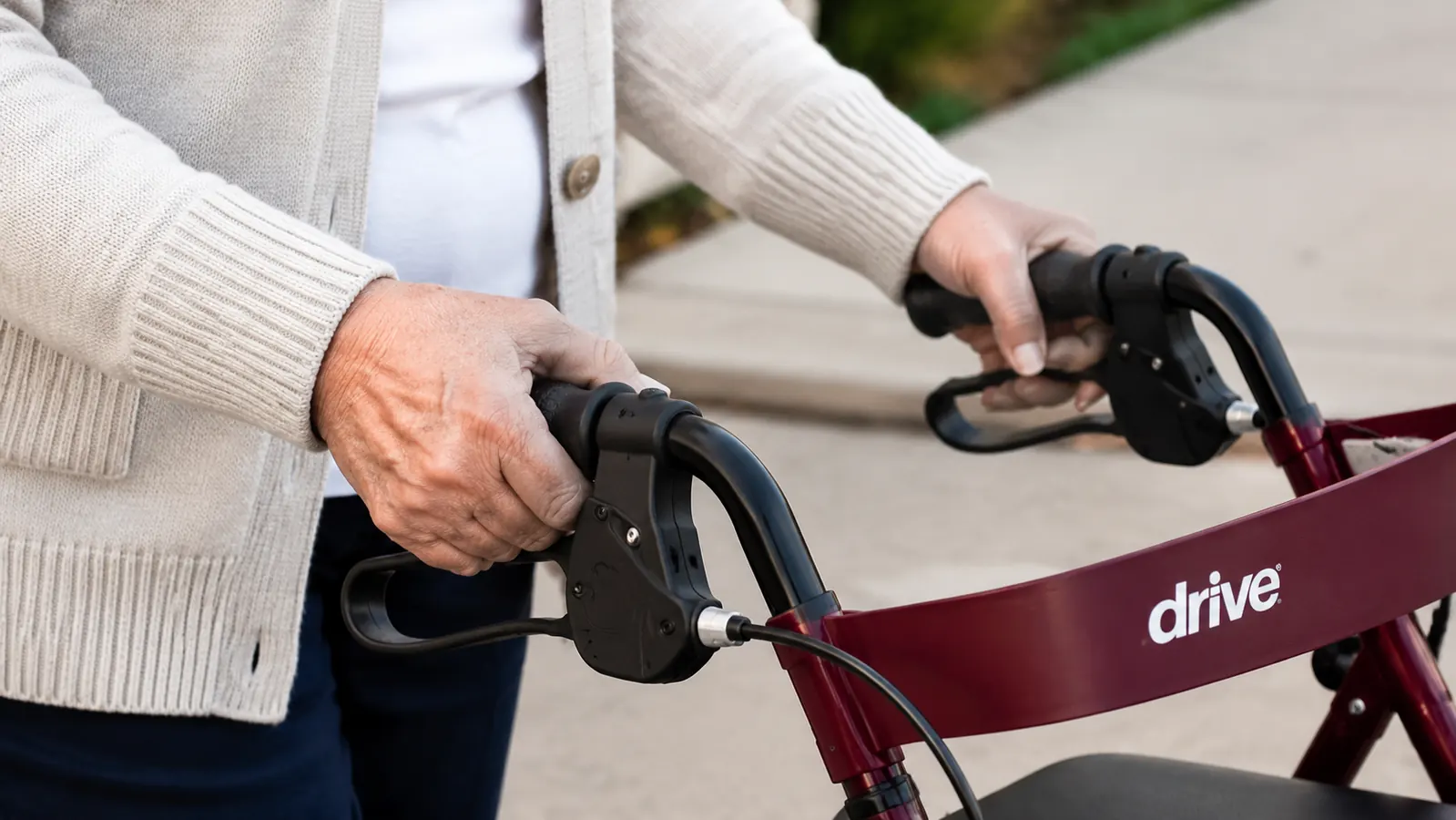
The first week I used it only inside the house, which is where my PT told me to start. Getting used to the feel of rolling brakes versus a standard walker takes a few days. The hand brakes lock down when you press them and squeeze into a push-to-lock position to hold the walker in place when you sit. I got comfortable with that quickly. By week two I was taking it to the driveway, then down the sidewalk, then eventually to the farmer's market two blocks from my house. By month three it was fully part of my daily life.
I keep a weekly count in my journal, which I know sounds like a lot, but it gives me data I trust. I have had zero falls since starting the rollator. In the two years before buying it, I had two serious falls and several near-misses. The rollator did not cure my balance problem. But it gave me something reliable to lean into before that moment where a step goes wrong, and that has made all the difference.
What Drive Medical Built Right
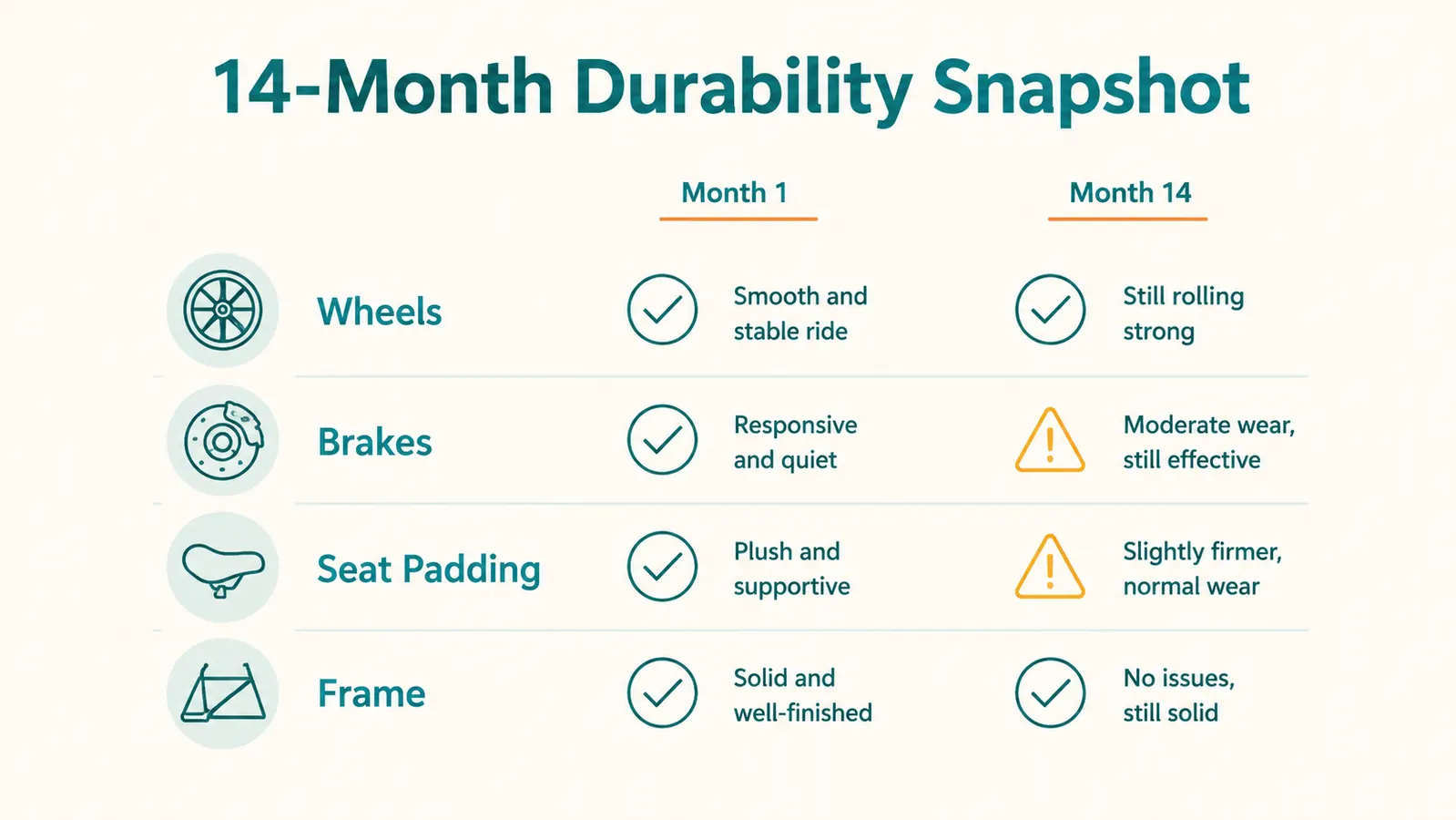
The frame. I expected it to feel cheap at this price point and it does not. The aluminum tube construction is light enough that I can pick the whole thing up with one hand to load it into my car trunk, but it does not flex or wobble underfoot. I weigh 167 pounds (down from 215 when I started PT after my second fall), and the rollator has never felt unstable with my full weight on the handles. Drive Medical rates it for 300 pounds. That headroom matters for confidence, not just for heavier users.
The brakes are the most important part of a rollator and they work consistently. They are loop-style levers you pull back toward the handle to slow or stop. After 14 months of daily outdoor use, including wet pavement, the cable tension feels the same as when I bought it. I tightened the cable once around month seven when I felt the brake response getting slightly soft, which took about two minutes with a Phillips screwdriver. That is the only maintenance it has needed.
The wheels are 6-inch solid rubber. They roll smoothly on tile, hardwood, sidewalk, and packed-dirt paths. I have pushed this through the grass median in the farmer's market parking lot a dozen times. It handles it. Cobblestone is rough and you feel every gap, but I don't live in Europe so it's not a concern for me. The wheels show wear marks at 14 months but have not cracked or gone flat.
The Seat: It Works, But Know What You're Getting
The padded seat is 17.5 inches wide and is one of the most useful features of the whole rollator. When I feel tired on a walk, I stop, engage the brake, and sit. No searching for a bench, no asking someone to hold the walker. I just sit. The seat is padded with a thin layer of foam over a metal base. It is firm. It is not cushy. For a quick two-minute rest it is fine. For sitting for fifteen minutes reading a book, I would want a cushion. I keep a small folded chamois in the under-seat basket for exactly this reason.
The seat width is my biggest practical complaint. At 17.5 inches, it is not generous. I am a size 14 and I fit comfortably, but just. If you are larger, or if you are buying this for someone who is wider in the hips, measure before you commit. There are wider rollators on the market, though most of them are heavier and harder to fold.
After my second fall I thought my walking days were numbered. Fourteen months later I am still going to the farmer's market every Saturday. The rollator is the reason.
The Folding and Transport: Where It Earns Its Price
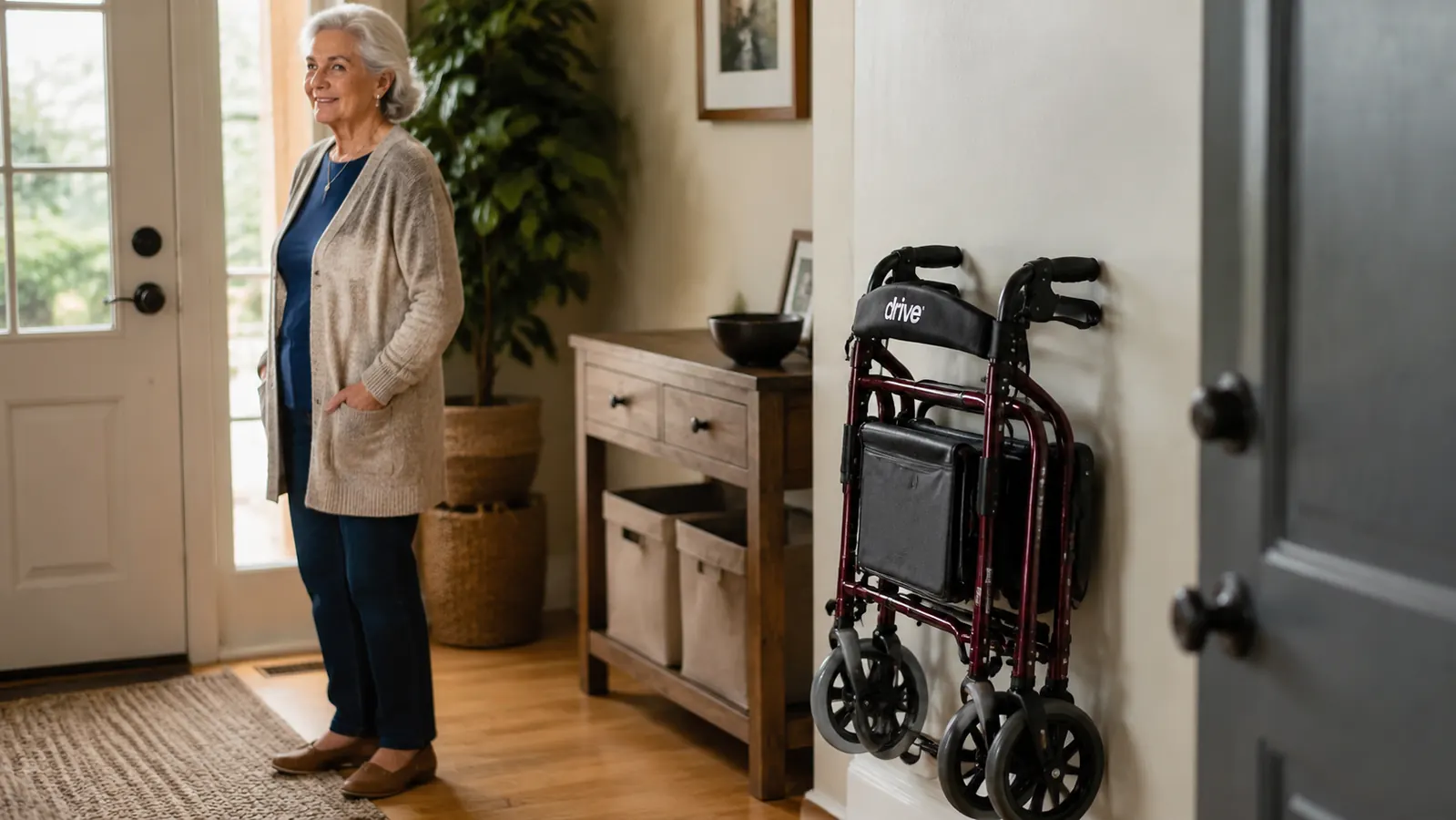
I drive myself to appointments and errands. The dual-release folding mechanism on this rollator is genuinely simple. You pull up on the center strap, both sides fold together, and the whole thing collapses flat in about three seconds. I load it into my trunk by resting one end on the bumper lip and sliding it in. It weighs 13.2 pounds. That is light enough for me to manage alone, which matters. Twelve months ago I could not have said that. But I lost weight through PT and diet, and I have built back enough arm strength that I can handle this myself. If you or your parent currently cannot lift thirteen pounds reliably, have someone help with car loading until that changes.
The folded dimensions are compact enough to fit behind my front seat if my trunk is full. It stands up on its own when folded, which is useful in small apartments or entryways. I store mine next to my front door and fold it every time I come in, which means I've folded and unfolded it probably 400 times. The mechanism has not loosened or stuck.
What Wore Down Over 14 Months
The under-seat basket is the weakest part. It is a small wire basket, roughly 10 inches by 7 inches, that clips beneath the seat. It holds a water bottle, a small purse, or a library book. It does not hold a bag of groceries unless that bag is very small. The mesh fabric liner that came with the basket deteriorated at the seams by month six and I replaced it with a folded cloth bag, which works better anyway. The basket wire frame itself is still intact.
The handle grips have softened slightly from daily use but have not cracked or peeled. I cleaned them with a damp cloth weekly and that seemed to preserve them. The seat surface has a small surface scratch from one time I loaded it into the trunk at an angle, but it is cosmetic. Structurally, at 14 months, everything is functionally the same as month one.
How This Compares to the Standard Walker I Used Before
I had a standard four-legged walker from the hospital after my first fall. You pick it up, move it forward, step into it, repeat. It is stable but it forces a broken, slow gait. My PT told me that gait pattern is actually hard on your hips and back over time, and that for someone who is ambulatory (meaning I can walk, I just need support), a rollator is almost always better. I wrote more about that comparison in my article on rollator walkers versus standard walkers if you want the full breakdown.
The rollator lets you walk at a natural pace with a natural stride, which was the single biggest adjustment coming from the standard walker. I felt like myself again within a week. The fear of falling did not go away overnight, but the act of walking felt normal again. That psychological shift mattered more than I expected it to.

What I Liked
- Held up structurally through 14 months of daily outdoor and indoor use
- Brakes are consistent and easy to operate with arthritic hands
- Folds flat in three seconds, light enough (13.2 lbs) to load into a car trunk alone
- Seat is functional for rest stops on longer walks
- Height adjustable handles fit most seniors without buying an accessory
- Under 60 dollars is genuinely good value for the build quality you get
Where It Falls Short
- Seat is 17.5 inches wide, which is tight for larger adults
- Under-seat basket is small and the fabric liner did not last six months
- 6-inch wheels handle most outdoor surfaces but feel rough on cobblestone or gravel
- Handle height maxes out around 38 inches, which may be short for very tall users
- No cup holder included (I bought a clip-on one separately for about eight dollars)
Who This Is For
This rollator is the right choice if you or your parent is ambulatory, gets outside regularly, and needs reliable daily support without spending a lot of money on it. The person who will love this rollator is someone who wants to keep walking, keep going to the store, keep showing up to church or the farmer's market, and who needs something that gives them confidence without slowing them down. It is also right for adult children who are buying for a parent who has had a fall or a near-miss and needs something that actually travels well. If your parent has a compact car and loads things themselves, this is the rollator that fits that life.
Who Should Skip It
If the person needing a rollator is primarily using it indoors on carpet and tile, and especially if they are heavier or wider, I would look at a wider-seat model or one with 8-inch wheels. If your parent is in a memory care facility or has significant cognitive decline, a different style of walker with more lockable features may be safer. And if the primary environment is rough outdoor terrain, grass, or packed gravel, the 6-inch wheels will work but you may be happier with a heavier-duty model. I also want to mention: if you are on the fence about whether your parent needs this, read my article on 10 reasons a rollator walker helps seniors stay active longer. That one addresses the "do I really need this yet" question directly.
Fourteen months in, I would buy this again without hesitation. It costs less than one doctor's visit copay.
The Drive Medical rollator is the most-reviewed mobility aid on Amazon and, in my experience, earns that reputation. Current price and availability can change, so check before you decide.
Amazon Check Today's Price on Amazon →