
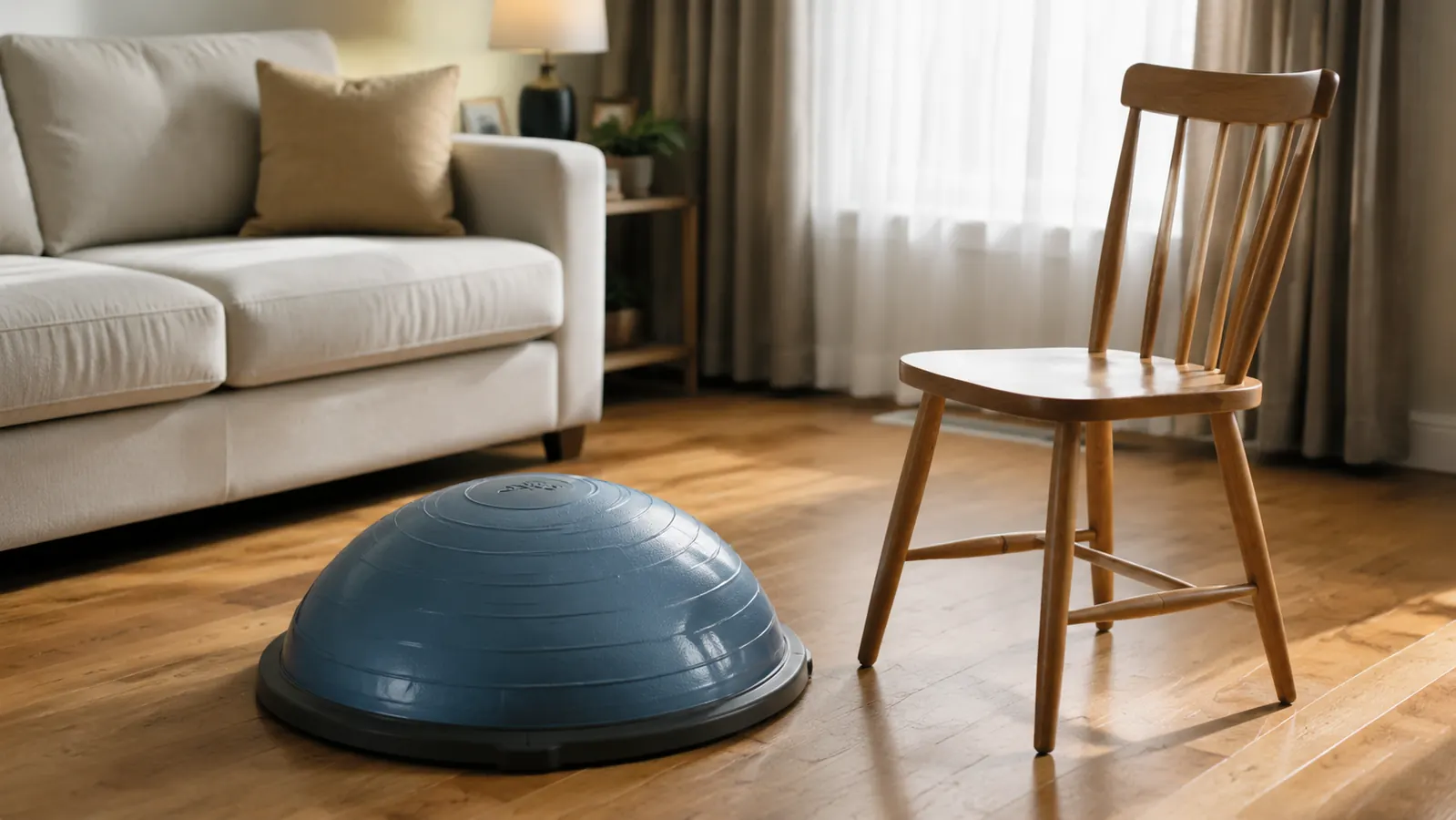
After I broke my wrist in a shower fall, my occupational therapist handed me a list of things to get. Grab bar. Non-slip mat. Shower chair. And, at the bottom of the list, a note that said: "Consider balance trainer for ongoing stability work." Everything else on that list was under $60. The balance trainer she circled was the Bosu Balance Trainer, and it cost $149.99. I stared at that price for about a month before I ordered it.
That was roughly six months ago. I have used it. I have read through the one-star Amazon reviews and I know what people are upset about. I have figured out who this thing is genuinely right for and who is better off with a $20 foam pad. I want to tell you all of that plainly, because the five-star reviews tend to be from people who just got it out of the box, and the one-star reviews tend to be from people who had the wrong expectations to begin with. Neither group is giving you the full picture.
The Quick Verdict
The Bosu is worth $150 if you are committed to a regular balance practice and you have already had a fall or near-fall. It is not worth it if you want a passive safety product, if you have severe balance deficits without professional guidance, or if you are buying it as a gift for someone who will not actually use it.
Amazon Check Today's Price →One fall costs far more than $150, in medical bills, in lost independence, in fear
The Bosu Balance Trainer has over 10,000 reviews on Amazon and is used by physical therapists in clinical settings. If you or a parent has had a fall, check the current price and availability before deciding.
Amazon Check Today's Price on Amazon →What the Amazon Listing Does Not Tell You
The listing says "guided workouts included." What it does not tell you is that those guides are printed booklets and a link to basic videos, not a structured program designed for seniors or for fall prevention specifically. The exercises shown skew younger and more athletic. If you are coming to this after a fall, you will need to adapt the instructions or, better, get a few sessions with a physical therapist or occupational therapist first so you know where to start. My OT gave me four specific starting exercises that were nothing like what the booklet showed. If you want to see what a real beginner plan looks like, I have written a plain-language six-month walkthrough of using the Bosu for fall-prevention exercises that goes step by step through what the first weeks actually feel like.
The listing also does not mention weight clearly upfront. The Bosu weighs about 18 pounds. That sounds fine until you realize you cannot tuck it under an arm and carry it easily, and bending over to pick it up from the floor requires the kind of hip hinge that is itself a fall risk for some of us. Where you plan to store it matters. I keep mine in the corner of my living room where it does not move. If your plan is to bring it out for sessions and stow it away after, think that through before you buy.
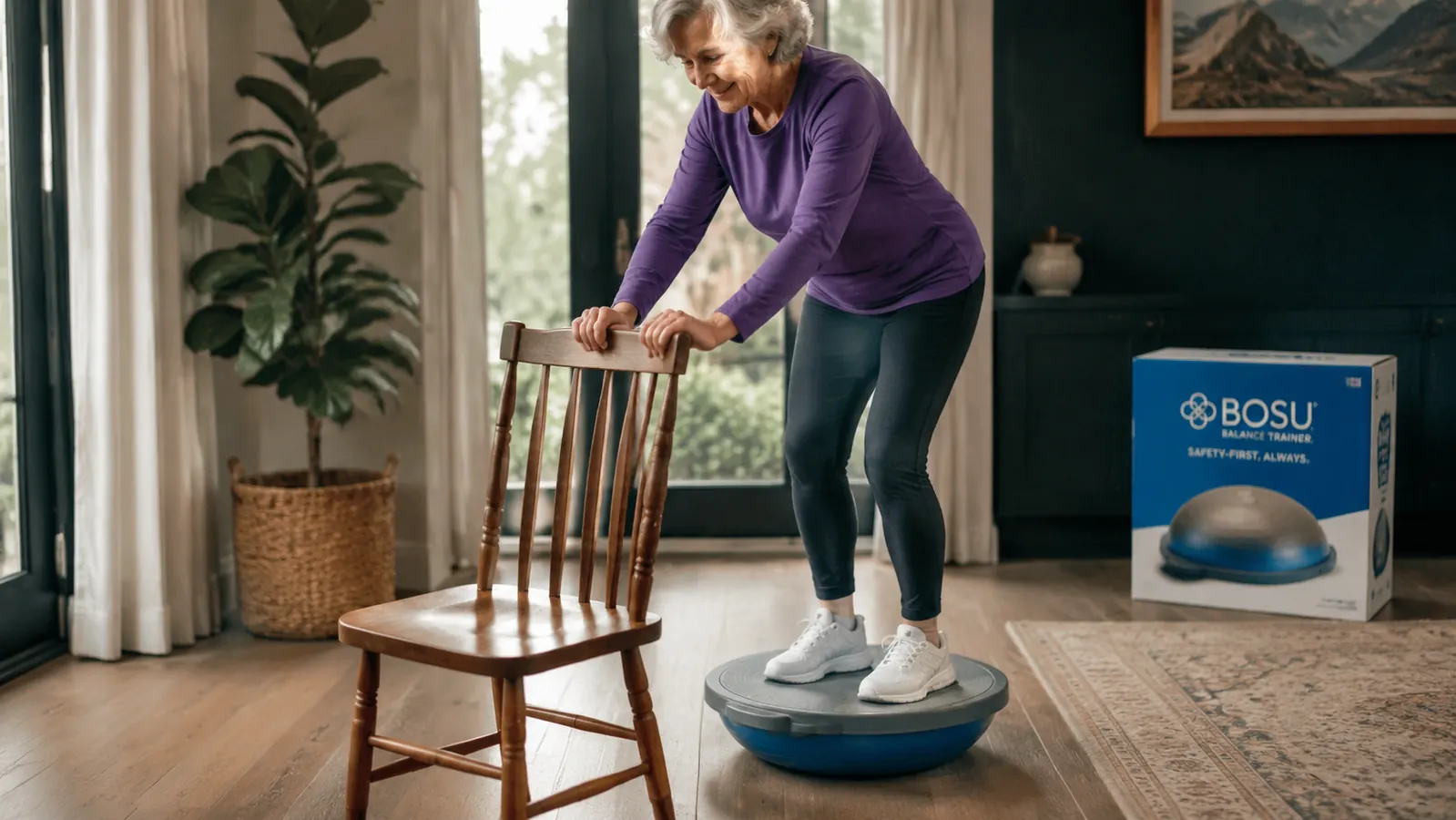
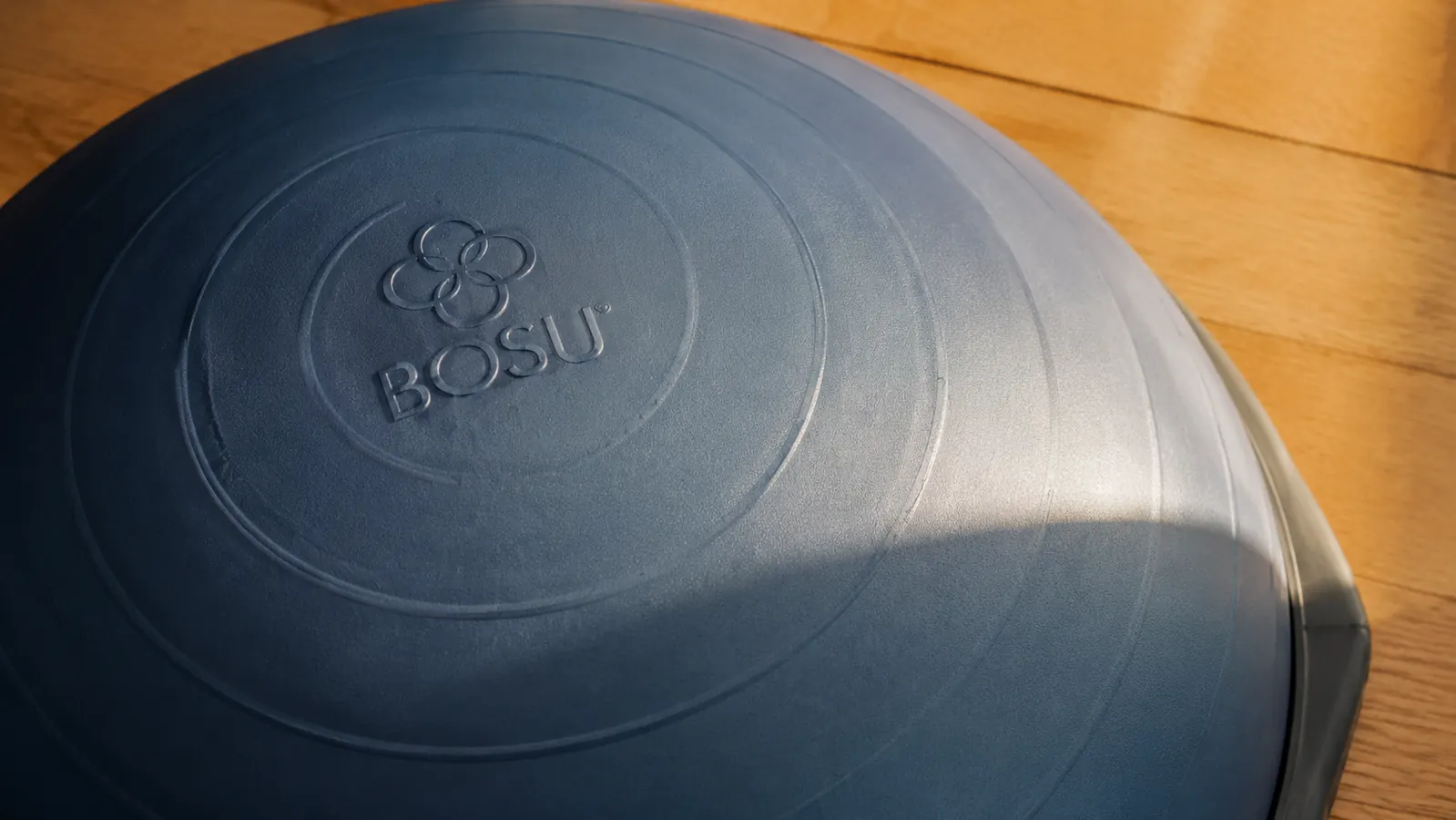
And the listing photo shows the dome side up, which is how most people picture using it. But for seniors, the flat side up is where you start. The dome-up position requires substantially more ankle strength and confidence. Expecting to use the dome side on day one is a mistake that has led to more than one frustrated one-star review.
What the One-Star Reviews Are Actually About
I read through a few dozen of the negative Amazon reviews before I wrote this. Most of them fall into three categories. The first is people who expected a product that would improve their balance simply by owning it. That is not how this works. The Bosu is a piece of exercise equipment. You have to actually stand on it regularly for it to do anything. If you set it up once, wobble on it, get nervous, and put it in a corner, you will leave a one-star review. That is not the product failing you. That is the expectation mismatch.
The second category is people who had it deflate or who had trouble with the pump fitting. I will address this directly: my Bosu has held its inflation just fine over six months without me topping it off. But the pump valve and fitting can be fussy if you are not used to it. Read the instructions on the first inflation carefully and do not rush it. The dome should feel firm, not hard. If it feels too soft, add a little air. If you overfill it, it gets harder to balance on and puts more stress on the base seam.
The third category is people whose Bosu arrived with a minor cosmetic defect or a slightly off-center dome. From what I can tell this is more common than BOSU would like. If yours arrives with a visible problem, return it under Amazon's standard policy. Do not try to work around a manufacturing defect in a balance product. That is not a complaint worth tolerating.
The Bosu will not improve your balance by sitting in the corner. It is exercise equipment. If you use it for 10 minutes a day, it works. If you do not use it, it does not. That is the whole story behind most of the one-star reviews.
The Learning Curve Nobody Warns You About
Here is the part that catches people off guard. The first few weeks on the Bosu feel like failure. Your ankles shake. You grab the chair constantly. You step off before you meant to. If you went into it expecting to feel capable and in control on day one, you will feel embarrassed and wonder if you made a mistake. You did not. Wobbling is the point. Your muscles are learning to react to instability. The wobble is the workout.
What helped me was keeping my first sessions very short. Five minutes. Literally five minutes. Two sets of 30-second flat-side stands with one hand on a chair back, then done. I felt ridiculous, but I also felt my ankles working in ways they had not worked in years. By the third week I was staying on for a full minute without grabbing the chair. By the sixth week I was experimenting with the dome side for the first time, with a wall within arm's reach. The learning curve is real, but it flattens. If your parent is in that frustrated first-week window, tell them to keep going. It does not feel like progress when you are in it.
Is $150 Actually Worth It for Fall Prevention
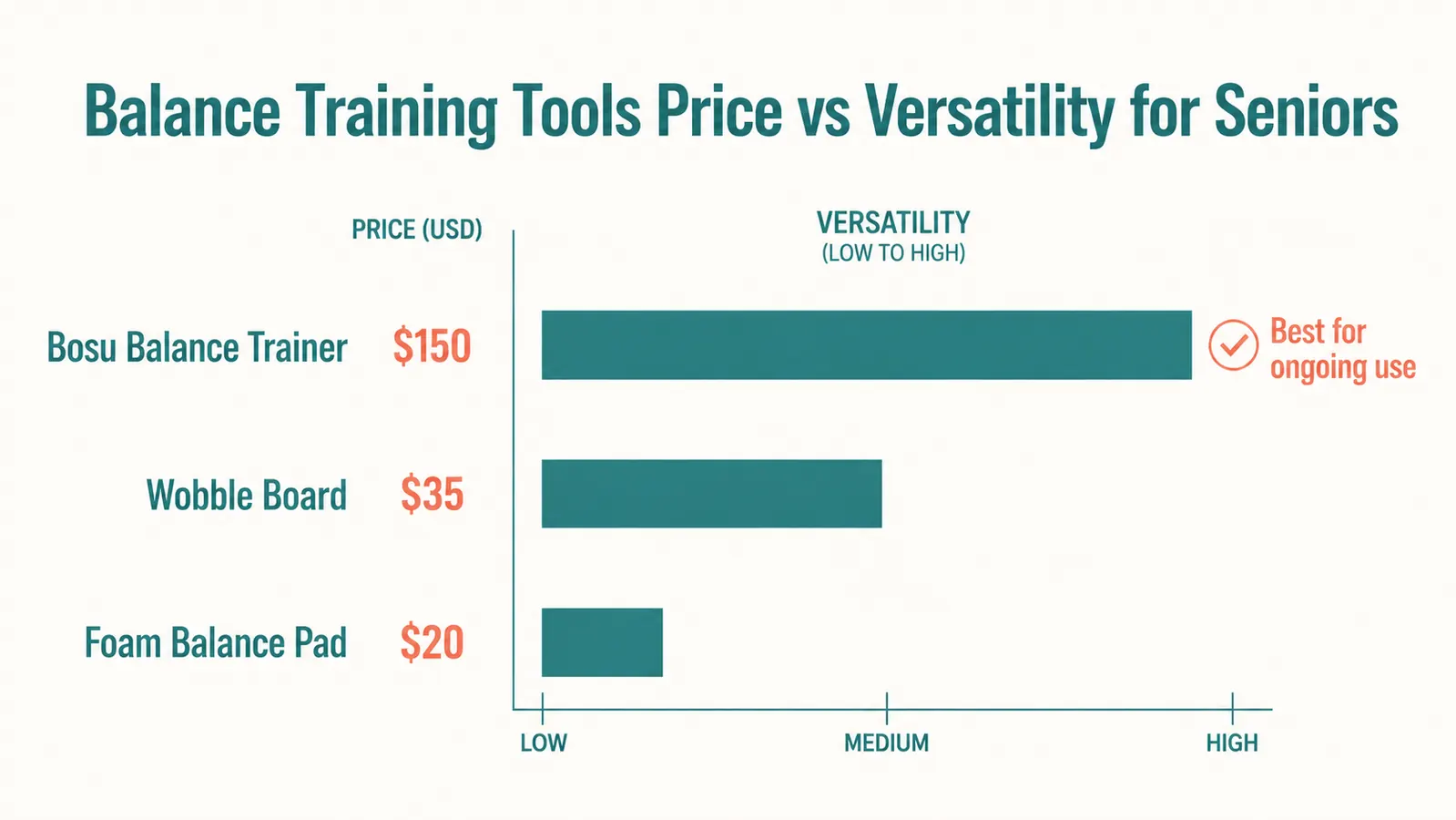
This is the honest question, so here is my honest answer. If your parent is committed to doing 10 to 15 minutes of balance exercises three to five times a week, the Bosu is worth it over a foam pad for three reasons. First, it gives you two distinct challenge levels in one piece of equipment. The flat side is genuinely easier and more stable; the dome side is genuinely harder and more destabilizing. A foam pad gives you one challenge level and you outgrow it faster. Second, the larger surface area is genuinely less frightening for someone who is already afraid of falling. A small balance disc feels precarious. The Bosu feels like something you can actually stand on. Third, the Bosu lasts. I have not had to top it off, it has not cracked, and it shows no sign of wear after six months of use several times a week. The cheap foam pads compress and lose responsiveness within a year of regular use.
If your parent is not sure they will actually do the exercises, buy the foam pad first. Spend $20. See if the habit sticks. If they are doing balance work consistently after two months, upgrade to the Bosu. A $150 piece of equipment that gets used twice and sits in a corner is a worse investment than a $20 pad that gets used every morning. I want to be clear about that because I have seen well-meaning adult children buy the expensive version out of love and guilt after a parent falls, and then watch the parent never touch it.
My honest verdict on price: the Bosu is priced like a piece of real gym equipment because it is a piece of real gym equipment. Physical therapy clinics buy them. The price reflects durability and quality. Whether that price makes sense for your specific situation depends entirely on whether the equipment will get used. You can compare the Bosu directly against the cheaper foam option in my Bosu vs. foam balance pad breakdown, which goes into more detail on both.
What Surprised Me After Months of Use
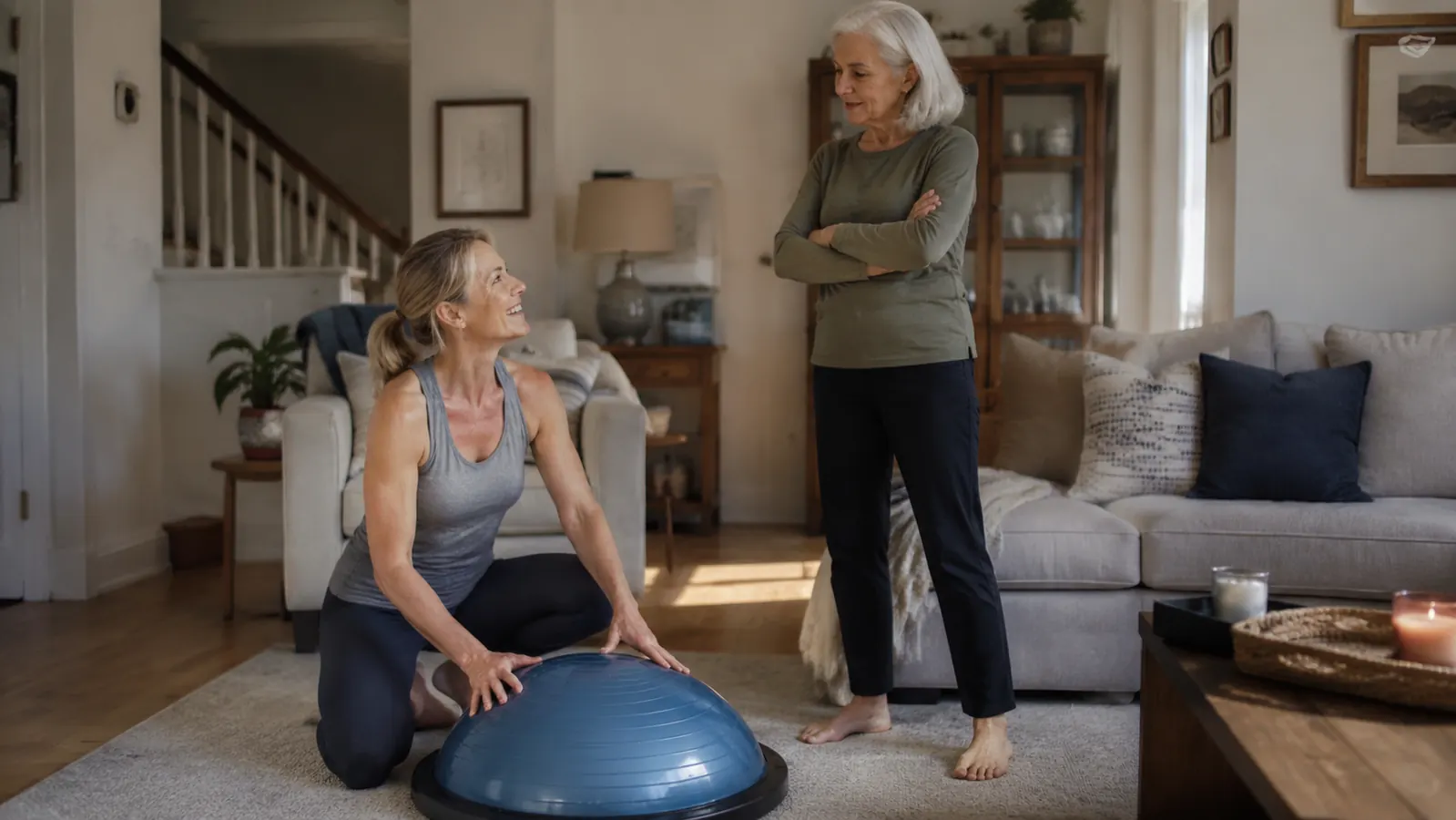
A few things I did not expect. The first is that the dome-up exercises became enjoyable. I do not say that lightly. I am not an exercise person. I never have been. But there is something satisfying about feeling your balance get measurably better. Standing on the dome for 45 seconds without touching the chair is a real achievement when you started at five shaky seconds. The Bosu gives you something to measure yourself against in a way that walking around the block does not.
The second surprise was how much my confidence changed in daily life, not just on the Bosu. I walk on gravel now without mentally rehearsing what I would do if I started to go. I step off curbs without bracing. Crossing a wet parking lot still makes me careful, because it should, but it does not trigger the low-level dread that used to follow me everywhere after my wrist fall. That shift was not instant. It happened gradually over several months. And I cannot tell you it was only the Bosu. My overall exercise routine improved, my diet got better, and I lost weight over the same period, all of which affect balance. But the Bosu was part of what changed.
The third thing that surprised me was how easy the setup was. There is no assembly to speak of. You inflate the dome and put it on the floor. The pump that comes with it works. The first inflation took me maybe ten minutes. That is it. I had expected something more complicated and was relieved when it was not.
What I Liked
- Two distinct challenge levels in one product: flat side for beginners, dome side as you progress
- 26-inch diameter provides a genuinely large standing surface that feels less precarious than small balance discs
- Firm rubber dome holds inflation well over months without frequent topping off
- Durable construction that physical therapy clinics actually purchase and use
- Gradual, measurable progress builds confidence that transfers to real-world movement
- Seated exercises possible for those not yet ready to stand, extending its useful range
Where It Falls Short
- Price is high relative to foam pads and only worth it if you will use it consistently
- Weighs roughly 18 pounds, making it difficult to move frequently between rooms
- Included workout guides skew athletic and are not designed specifically for fall-prevention or seniors
- Dome-side use requires a courage adjustment period that discourages some buyers before they progress
- Occasional reports of minor manufacturing defects, so inspect on arrival and return if anything looks off
Who This Is For
The Bosu makes sense if you or your parent has already had a fall or a serious near-fall, has enough baseline stability to stand with light support, and is genuinely committed to a regular exercise habit. It also makes sense if you are buying for a parent who has been told by a doctor or therapist that balance training is part of their recovery or prevention plan, and who is willing to act on that advice. The fear of falling again is a powerful motivator. If your parent already feels that fear, it will push them through the difficult early weeks when the Bosu feels hard. You can read more about why balance training matters at any age in my piece on 10 reasons balance training reduces fall risk for seniors.
Who Should Skip It
Skip the Bosu if your parent is in active recovery from a fall injury, a hip replacement, or major knee surgery. That is not the time. Talk to the physical therapist first and come back to this conversation in three to six months when they have a foundation of strength and stability to build on. Skip it if your parent has severe balance problems and no professional guidance. And honestly, skip it if your parent is the kind of person who will not use exercise equipment. There is no shame in that. Most adults do not follow through with home exercise equipment consistently. But a $150 piece of equipment that sits unused is worse than a $20 foam pad that collects dust in a slightly cheaper way. If motivation is uncertain, start with the foam pad or with this beginner balance training plan for seniors who have already fallen, which does not require any equipment at all for the first few weeks.
If the fear of another fall is already in the back of your mind, that fear is telling you something worth listening to
The Bosu Balance Trainer is available on Amazon. It is the same platform physical therapists use in clinical practice. At current pricing it is one of the more durable home balance investments available. Worth checking the current price before you decide.
Amazon Check Today's Price on Amazon →